Here are 10 Birds of Belize you must see!
Almost 600 bird species have been identified in Belize, 20% of them winter migrants from North America. Even if you are not an ‘avid birder’, you’ll be amazed by the colorful species that you may encounter on any nature trip.
The tropical forests, savannas, numerous cayes, wetlands, and coastal plains of Belize offer a myriad of habitats for many birds. Nearly half of our nation’s land and adjacent waters are protected under forest reserves, marine reserves, wildlife sanctuaries, national parks, and other protected area designations.
We listed the most impressive birds found in Belize:
1. Scarlet Macaw (Ara macao cyanoptera)
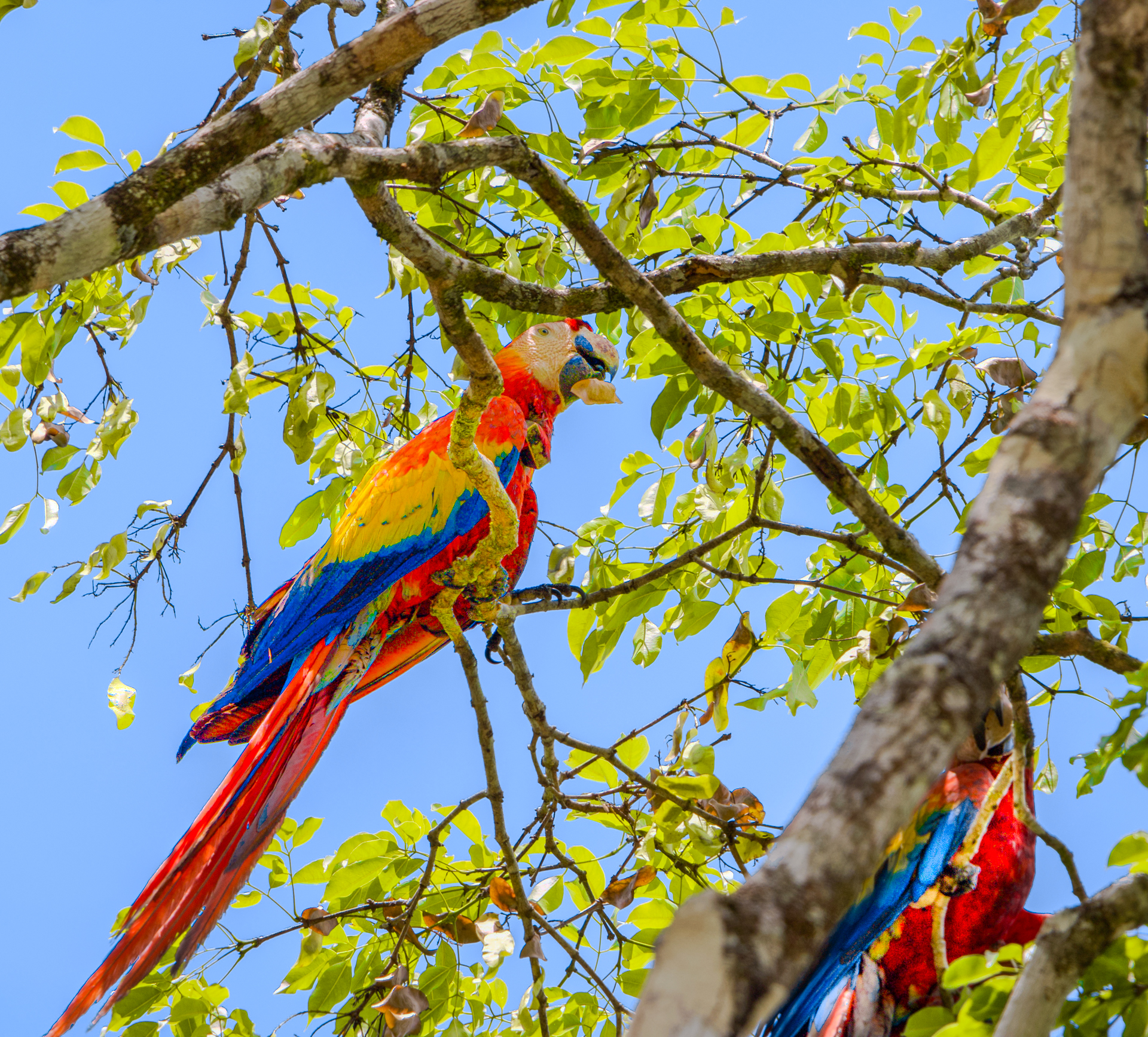
Belize is home to one of Central America’s most important remaining populations of the Scarlet Macaw (Ara macao cyanoptera), with an estimated 350 birds concentrated primarily within the Chiquibul–Maya Mountains landscape of western Belize. At the heart of their protection is Friends for Conservation and Development (FCD), whose Scarlet Macaw Conservation Program monitors nesting sites, protects chicks from poaching, conducts research and veterinary interventions, and rehabilitates and releases vulnerable birds back into the wild. Conservation efforts have produced encouraging results: 40 Scarlet Macaw chicks fledged into the wild during the 2025 season, and in August 2026, 15 rehabilitated macaws were released into the Chiquibul Forest in one of the program’s largest releases since conservation work began in 2012.
For travelers wondering where to see Scarlet Macaws in Belize, the country’s most important habitats are found in the remote forests and river valleys of western Belize. The Upper Macal River, Raspaculo River, Monkey Tail Branch, Chiquibul River, Chalillo Lake and the forests surrounding Caracol form part of the species’ principal breeding and feeding landscape, while Red Bank in southern Belize is well known for seasonal Scarlet Macaw sightings. These protected forests are vital not only for Belize’s macaws but also for the extraordinary biodiversity of the greater Chiquibul ecosystem.
For birdwatchers and nature lovers exploring Belize, the Scarlet Macaw represents something larger than a spectacular wildlife sighting—it is a living symbol of why protecting Belize’s rainforests, rivers and wildlife corridors remains so important. And if you are unable to see a Scarlet Macaw in the wild, you can always stop by the Belize Zoo to see one.
2. Keel-Billed Toucan (Ramphastos sulfuratus): Belize’s National Bird
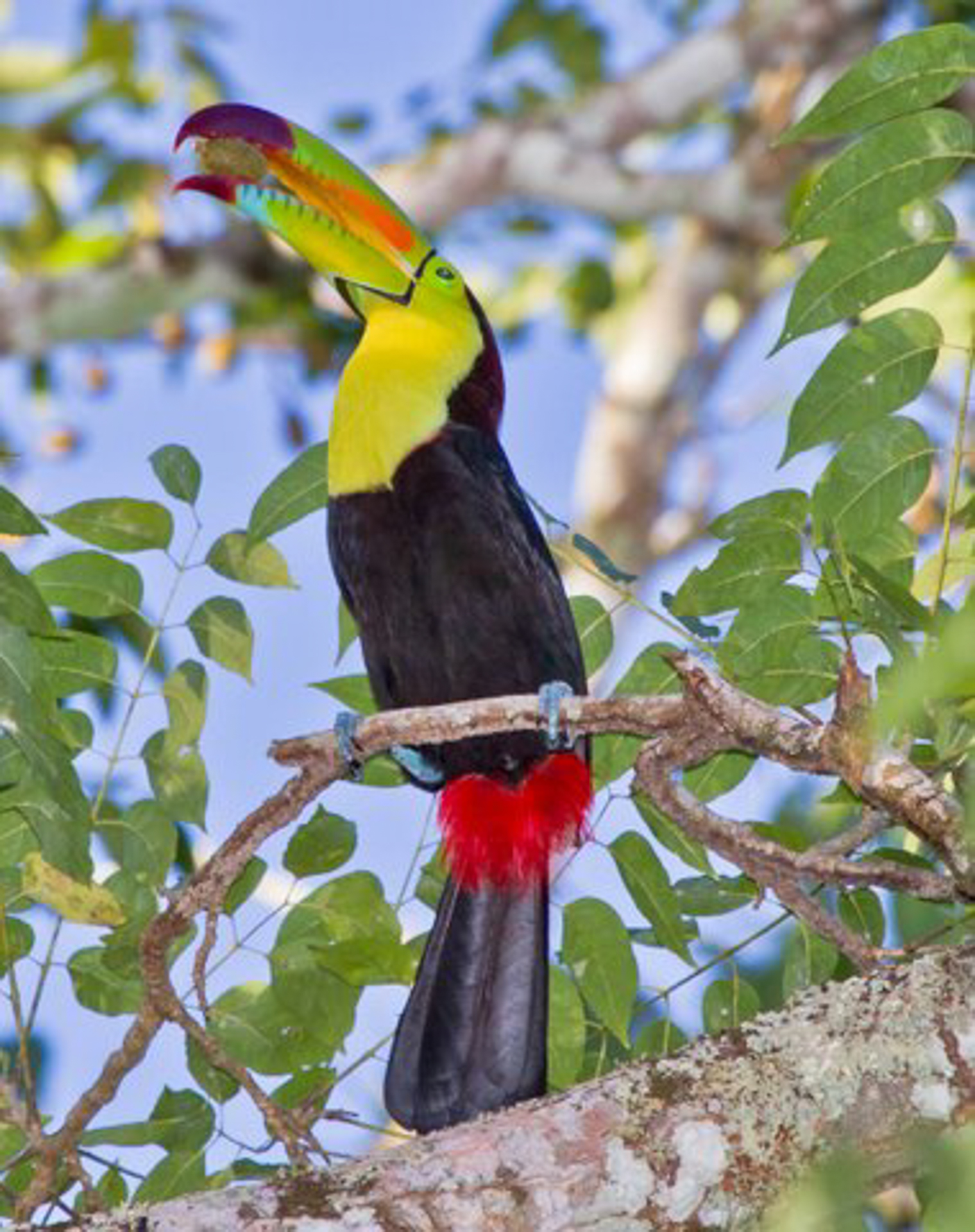
The Keel-billed Toucan (Ramphastos sulfuratus), locally known as the “bill bird,” is the national bird of Belize and one of the country’s most recognizable rainforest species. Its most striking feature is its oversized, brilliantly colored bill, displaying shades of yellow, orange, red, green, and black. Despite its size, the toucan is remarkably dexterous, helping it reach and feed on a variety of tropical forest fruits. Keel-billed Toucans are highly social and are often spotted in small flocks throughout Belize’s forests, where they typically nest in natural cavities and holes in tree trunks.
Often, you’ll hear a Keel-billed Toucan before you see one. Its distinctive, frog-like “croaking” call carries through the rainforest canopy and can help birdwatchers locate the bird among the trees. At The Lodge at Chaa Creek, Keel-billed Toucans can be spotted within the surrounding private nature reserve and are a favorite sighting on the Early Morning Birdwatching Tour, offering guests the chance to encounter Belize’s national bird in its natural rainforest habitat.
3. Lesson’s Motmot (Momotus lessonii)
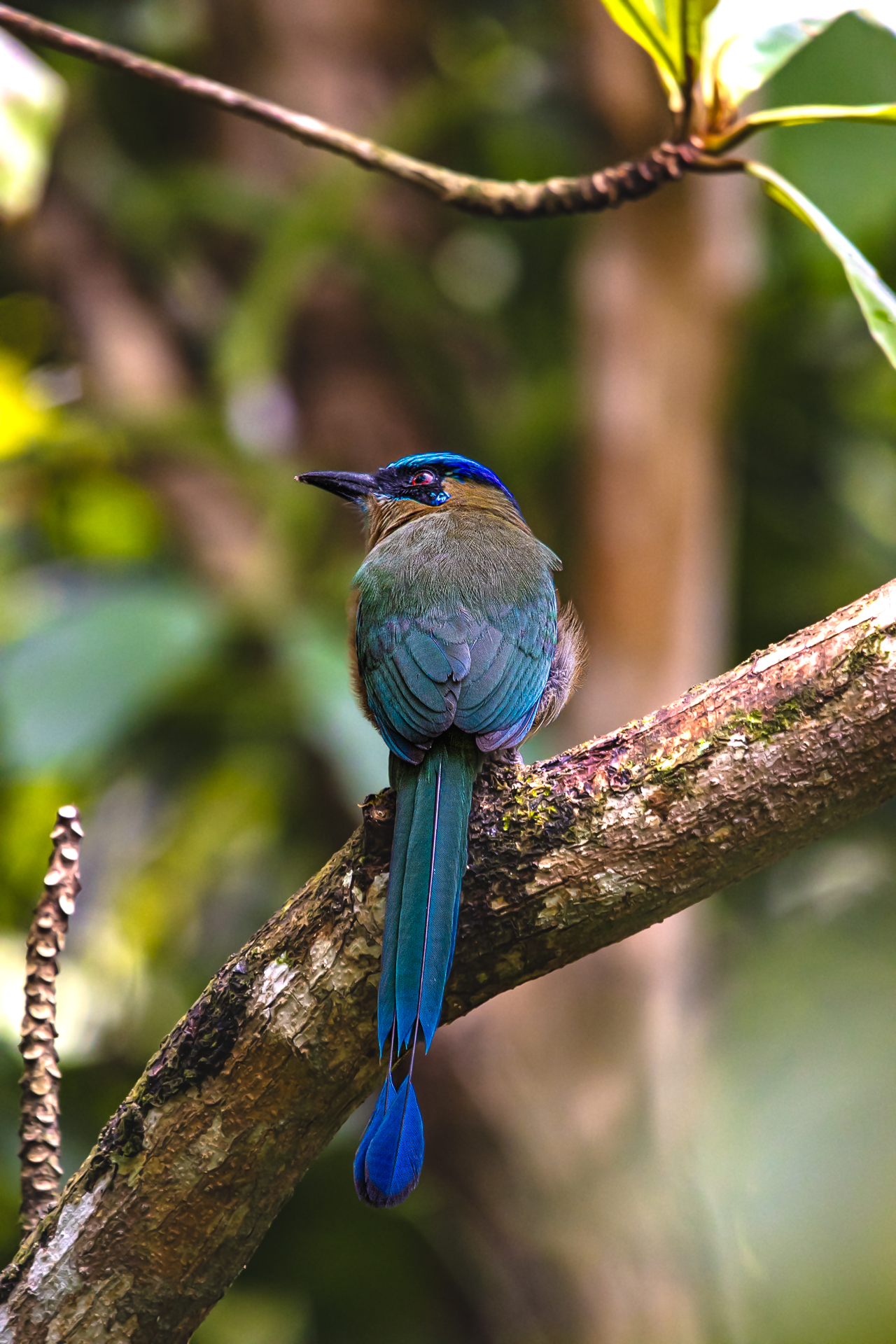
The Lesson’s Motmot (Momotus lessonii), formerly known as the Blue-crowned Motmot, is a striking tropical bird found throughout much of Belize. It inhabits forests, woodland edges, and other areas with mature vegetation, where it is often seen perched quietly in the shaded understory and lower levels of the forest. Adults measure approximately 38–43 cm (15–17 inches) in length, much of which is made up of their distinctive long tail.
One of the easiest ways to identify a Lesson’s Motmot is by its blue-and-black crown, green plumage and extraordinary racket-shaped tail feathers. Near the ends of the two central tail feathers, sections of the feather barbs are absent, creating the characteristic “rackets” associated with motmots. The birds can sometimes be seen slowly swinging their tails from side to side, particularly when alert. Their diet includes insects and other small animals as well as fruit, making them an important part of Belize’s diverse forest ecosystem. Unlike many forest birds that nest in trees, Lesson’s Motmots excavate burrows in earthen banks, where they raise their young.
Chaa Creek’s 500 acer nature reserve is home to Lesson’s Motmots; they are among the colorful resident birds guests may encounter within the surrounding private nature reserve. Early mornings are particularly rewarding for birdwatching, when the rainforest becomes active with calls and movement.
Guests joining Chaa Creek’s Early Morning Birdwatching Tour may have the opportunity to spot a Lesson’s Motmot perched beneath the canopy, sometimes remaining still long enough to appreciate its brilliant colors and unmistakable racket-shaped tail.
4. Harpy Eagle (Harpia harpyja): One of Belize’s Most Powerful Birds of Prey
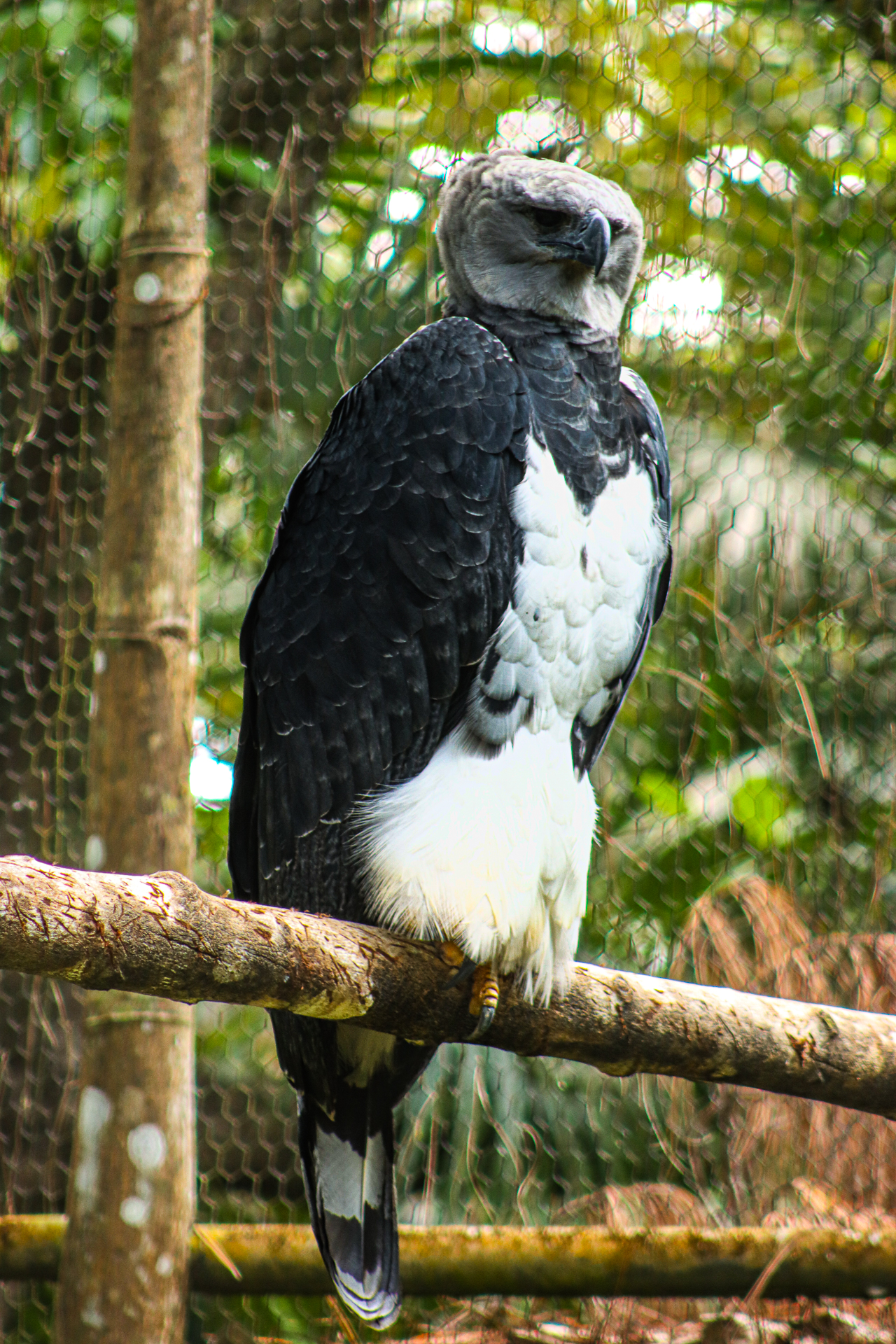
The Harpy Eagle (Harpia harpyja) is one of the largest and most powerful eagles in the Americas and an extraordinary, though extremely rare, member of Belize’s birdlife. Built for hunting within tropical forests, Harpy Eagles have exceptionally powerful legs and talons and prey primarily on tree-dwelling mammals, including sloths and monkeys. Females are considerably larger than males and can weigh around 20 pounds (9 kg), while adults can have a wingspan approaching 7 feet (2.1 meters). Despite their impressive size, their relatively broad, rounded wings allow them to maneuver through dense rainforest rather than relying primarily on soaring over open landscapes.
Historically found in Belize’s extensive tropical forests, the Harpy Eagle population declined dramatically due to habitat loss and fragmentation, shooting, and the destruction of nesting sites, eventually becoming extremely rare in the country. Conservationists have worked to change that trajectory. The Belize Harpy Eagle Restoration Project, developed through collaboration among the late Sharon Matola, The Belize Zoo, and The Peregrine Fund, helped reintroduce captive-bred Harpy Eagles into Belize and contributed valuable research toward understanding their survival and movements in the wild.
Today, Harpy Eagle sightings in Belize remain exceptionally uncommon, making the species an important reminder of the value of protecting the country’s large, connected rainforest habitats and the wildlife that depends upon them.
Check out Chaa Creek’s New Birds of Belize – An Avian Adventure Package
5. Red-footed booby (Sula sula)
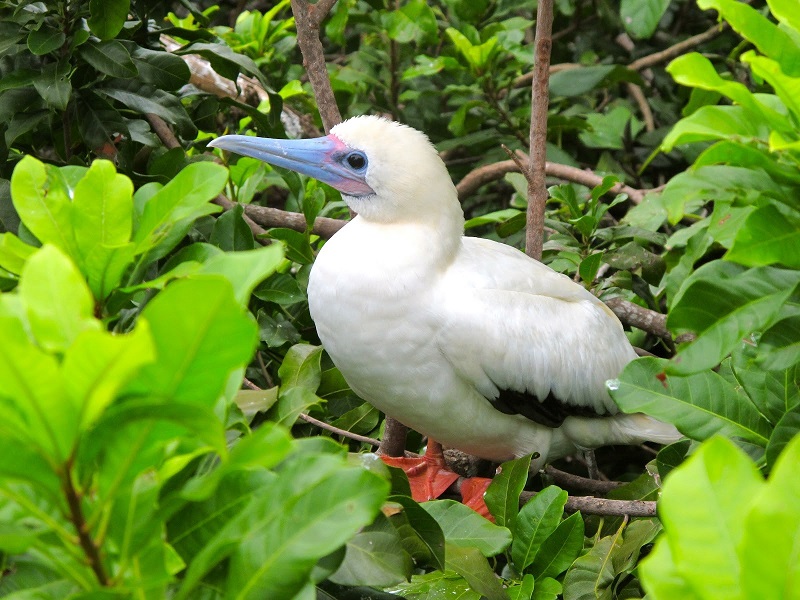
The Red-footed Booby (Sula sula) is a distinctive tropical seabird found along Belize’s Caribbean coast and offshore cayes. Named for its unmistakable bright red feet, the species can vary considerably in appearance, with plumage ranging from predominantly white to brown. Red-footed Boobies are exceptional ocean hunters, feeding primarily on flying fish and squid, which they capture by diving into the sea from the air. Despite being powerful and graceful in flight, their somewhat awkward movements on land helped inspire the name “booby,” derived from the Spanish word bobo, meaning foolish or clumsy.
In Belize, the most important place associated with the Red-footed Booby is Half Moon Caye Natural Monument, part of the Belize Barrier Reef Reserve System and home to a nationally significant nesting colony. The birds nest in trees and shrubs, unusual among boobies, and can often be observed gathering in the caye’s Ziricote forest, where nesting activity creates an impressive wildlife spectacle.
Half Moon Caye was designated Belize’s first protected area in 1982, initially established to protect the Red-footed Booby colony and its habitat. Today, seeing Red-footed Boobies at Half Moon Caye offers birdwatchers another perspective on Belize’s remarkable biodiversity, extending from the rainforests of the mainland to the islands and marine ecosystems of the Belize Barrier Reef.
6. Great Egret (Ardea alba)
7. Magnificent frigate bird (Fregata magnificens)
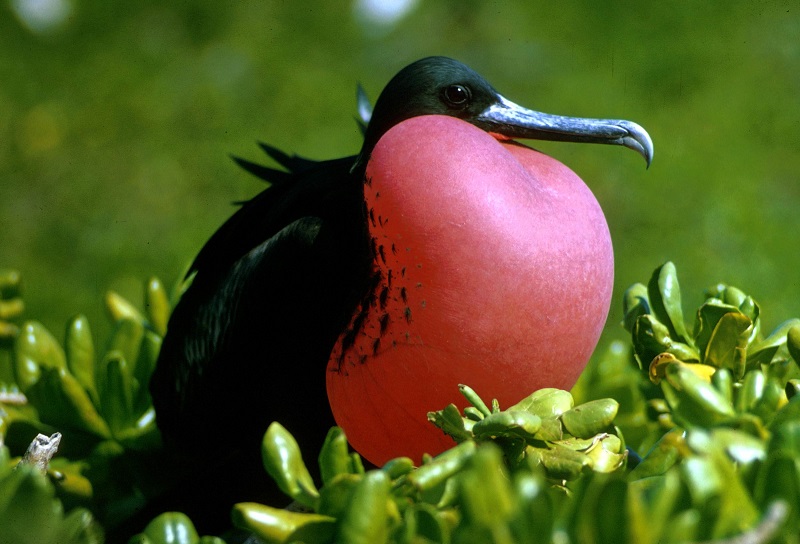
The Magnificent Frigatebird (Fregata magnificens) is one of the most recognizable seabirds along Belize’s Caribbean coast, offshore cayes and Belize Barrier Reef. With exceptionally long, narrow wings, a deeply forked tail and a wingspan that can exceed 7 feet (2.1 metres), these impressive birds are superb aerial specialists. They can spend long periods soaring high above the coast and sea, using rising air currents to remain aloft with remarkably little effort. Adult males are particularly distinctive during courtship, when they inflate their brilliant red throat pouch, or gular sac, into a large balloon-like display to attract females.
Unlike many seabirds, Magnificent Frigatebirds have poorly waterproofed plumage and generally avoid landing on the ocean. Instead, they capture fish and squid near the water’s surface and are famous for kleptoparasitism chasing other seabirds until they drop or regurgitate their catch and then snatching the food in mid-air. In Belize, one of the best-known places to see them is the Swallow Caye Wildlife Sanctuary, although they can frequently be observed soaring above coastal communities, mangrove islands and the reef. Their unmistakable silhouette makes the Magnificent Frigatebird an exciting addition to any Belize birdwatching experience, demonstrating that the country’s extraordinary birdlife extends well beyond its rainforests to the Caribbean Sea and offshore cayes.
8. Jabiru Stork (Jabiru mycteria)
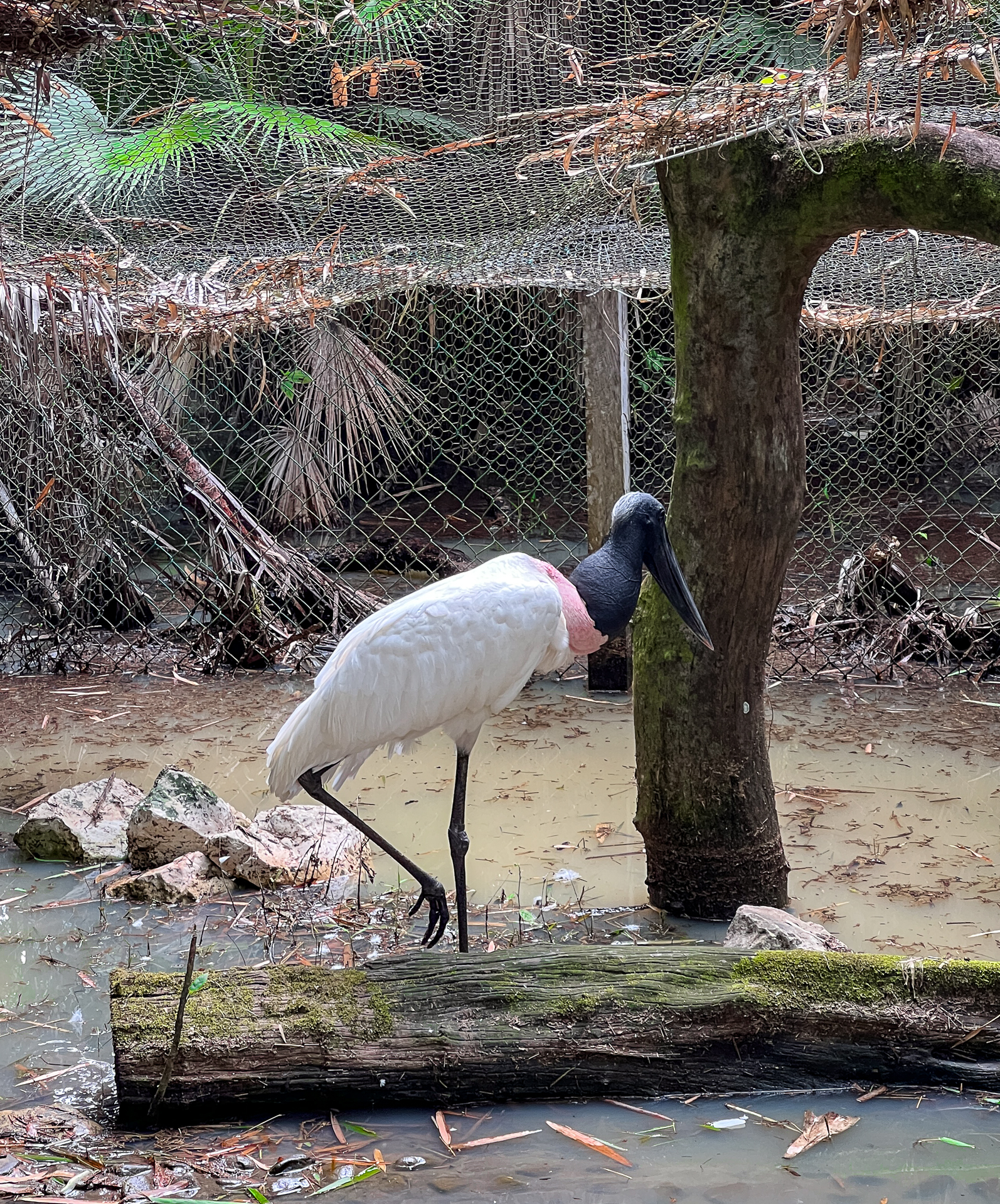
The Jabiru Stork (Jabiru mycteria) is one of the most impressive birds found in Belize and is considered the tallest flying bird in Central and South America, standing up to approximately 5 feet (1.5 metres) tall with a wingspan that can reach nearly 9 feet (2.8 metres). Its striking appearance makes it difficult to mistake: adults have predominantly white plumage, a featherless black head and neck, a distinctive red band around the lower neck, and a massive black bill adapted for capturing prey in shallow water. Despite their imposing size, Jabirus are accomplished fliers and can often be seen soaring high above Belize’s wetlands on rising thermal currents.
In Belize, Jabiru Storks are most closely associated with freshwater wetlands, lagoons, marshes and seasonally flooded savannas, where they feed on fish, frogs, snakes, crustaceans and other small animals. Belize represents an important part of the species’ northern Central American range, and Jabirus can be spotted in wetland areas such as Crooked Tree Wildlife Sanctuary, one of the country’s premier birdwatching destinations.
Their enormous nests are constructed high in large trees and may be reused over multiple breeding seasons. For travelers interested in birdwatching in Belize, encountering a Jabiru whether feeding quietly in a wetland or soaring overhead is one of the country’s most memorable bird sightings and another example of the remarkable diversity supported by Belize’s protected forests and freshwater ecosystems.
9. King Vulture (Sarcoramphus papa)

The King Vulture (Sarcoramphus papa) is one of the most striking birds of prey found in Belize’s tropical forests and one of the largest New World vultures. Adults are unmistakable, with predominantly white plumage contrasted by black flight and tail feathers and a brilliantly colored, featherless head displaying shades of orange, yellow, red and purple. A fleshy orange growth known as a caruncle sits above the bill of mature adults, giving the species an especially distinctive appearance. With a wingspan reaching approximately 6 feet (1.8 metres), King Vultures can often be seen soaring high above the rainforest canopy while searching for food.
Like other vultures, King Vultures are primarily scavengers, feeding on animal carcasses and performing an important ecological role by helping remove carrion from the forest. Their powerful bills allow them to tear through tough hides that smaller vultures may struggle to open, indirectly giving other scavengers access to food. In Belize, King Vultures inhabit large tracts of relatively undisturbed lowland and tropical forest, particularly within protected areas of the Maya Mountains and western Belize.
They can also be encountered in the forests surrounding The Lodge at Chaa Creek, where patient birdwatchers may spot their distinctive black-and-white silhouette soaring high above the Chaa Creek Nature Reserve. For travelers interested in birdwatching in Belize, seeing a King Vulture in the wild is a memorable reminder of the importance of conserving the country’s extensive rainforest habitats.
10. Yellow-headed Parrot ( Amazona oratrix belizensis)
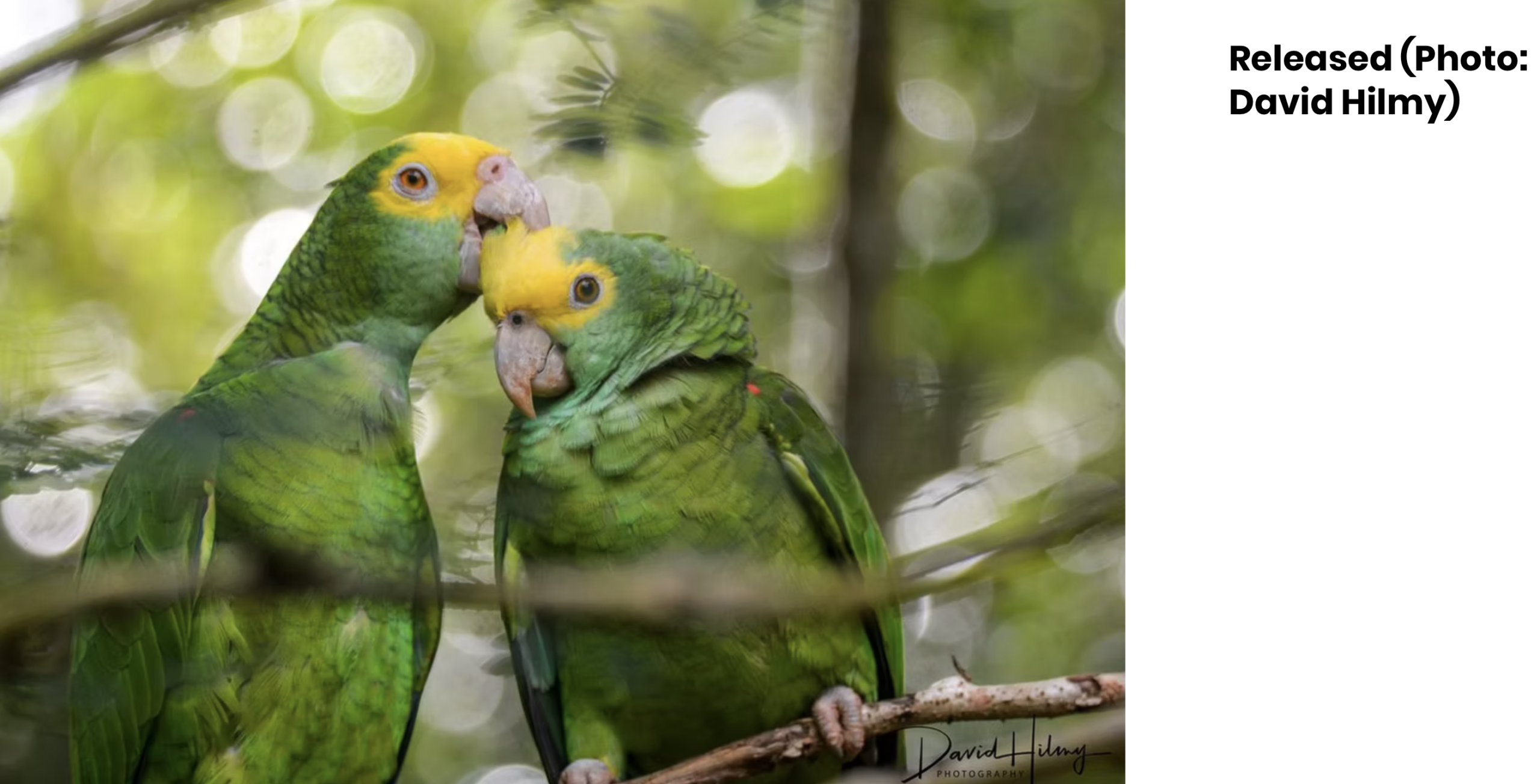
The Belize Yellow-headed Parrot (Amazona oratrix belizensis) is a subspecies of the Yellow-headed Amazon found in Belize and one of the country’s most distinctive and threatened parrots. Adults are predominantly green with a conspicuous yellow head, red patches on the wings, dark blue on the flight feathers, and yellow and red markings in the tail. Juveniles have considerably less yellow on the head, with the characteristic coloration becoming more prominent as they mature.
Known for their intelligence and remarkable ability to mimic human speech, Yellow-headed Parrots have unfortunately become highly desirable in the illegal wildlife trade. Habitat loss, particularly the degradation of Belize’s pine savannas, combined with the poaching of chicks from nests, has placed significant pressure on the wild population.
Conservation initiatives in Belize focus on nest monitoring and protection, anti-poaching efforts, habitat conservation, rehabilitation and the release of rescued parrots. Important habitat occurs within Belize’s lowland pine savannas, including protected landscapes such as the Rio Bravo Conservation and Management Area. For travelers interested in birdwatching in Belize, protecting species such as the Yellow-headed Parrot demonstrates why conserving Belize’s diverse forests and savannas is essential.
Contact us at [email protected] to book your next birding vacation in Belize.