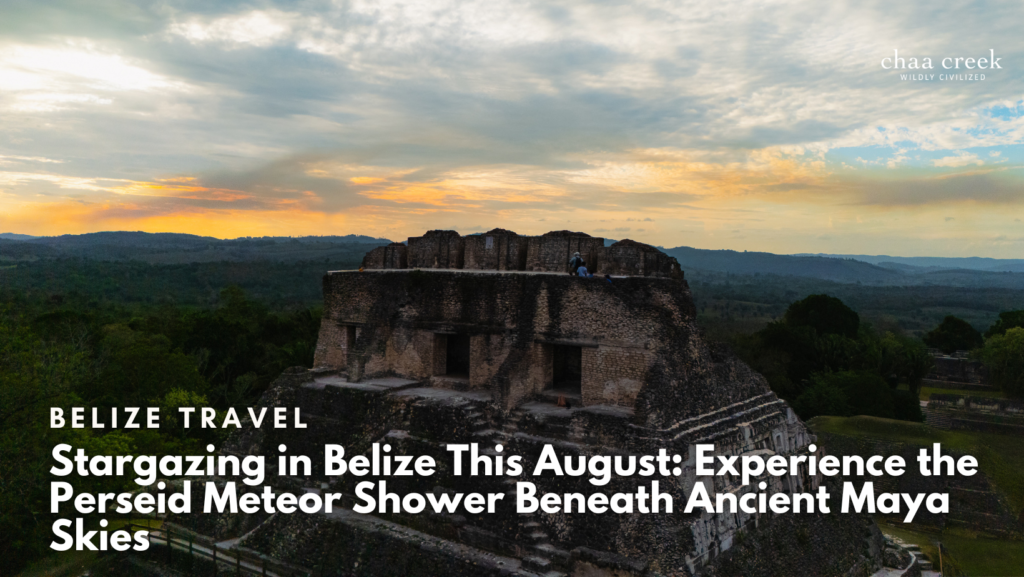
There are few places where the night sky feels as untouched as it does in Belize. As darkness settles over the rainforest, the sounds of the jungle replace the bustle of the day, and thousands of stars begin to emerge overhead. Away from large cities and heavy development, Belize offers some of the darkest skies in the region, creating ideal conditions for stargazing year-round.
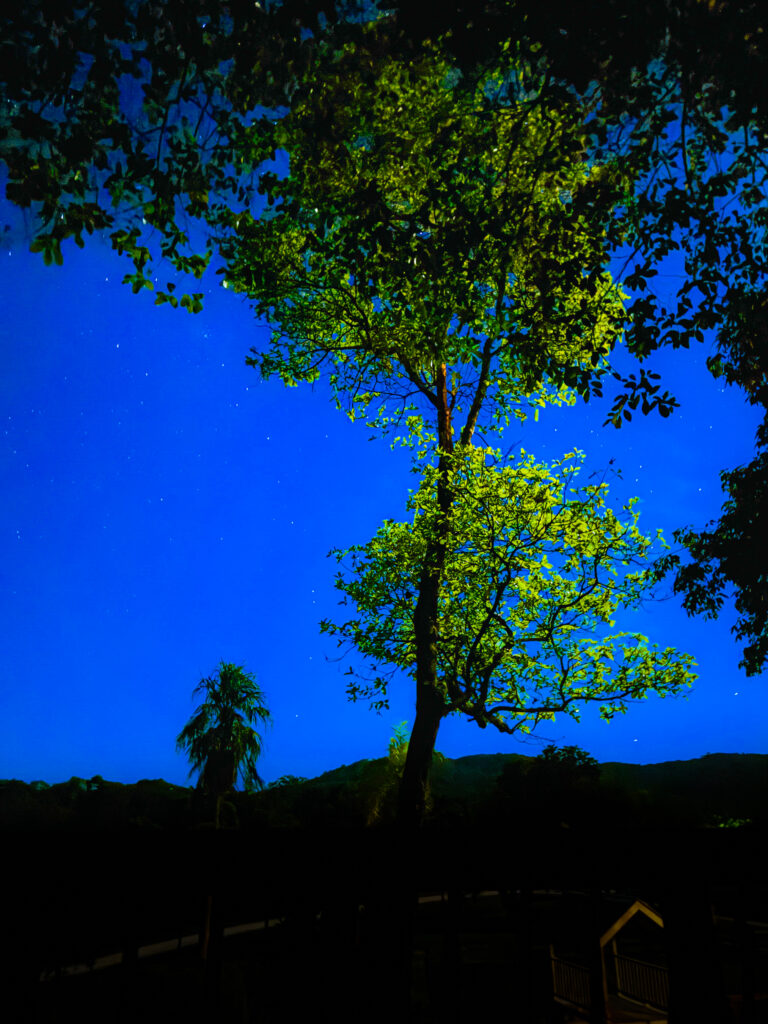
This August, those skies become even more spectacular as the Perseid Meteor Shower reaches its peak on the nights of August 12–13, 2026. Considered one of the year’s finest celestial events, the Perseids transform the sky into a natural light show, with dozens of meteors streaking overhead every hour.
View this post on Instagram
A Sky That Guided an Ancient Civilization
Long before telescopes and satellites, the ancient Maya looked to the heavens to understand the world around them. Across what is now Belize, Guatemala, Mexico, and Honduras, Maya astronomers carefully observed the movements of the Sun, Moon, planets, and stars, recording their observations with remarkable accuracy.
The night sky shaped many aspects of Maya life. Astronomical observations influenced agriculture, ceremonial calendars, architecture, and the timing of important rituals. Temples and ceremonial structures throughout the Maya world were often aligned with the rising or setting of celestial bodies during solstices, equinoxes, and other significant events, reflecting a deep understanding of the cosmos and its rhythms.
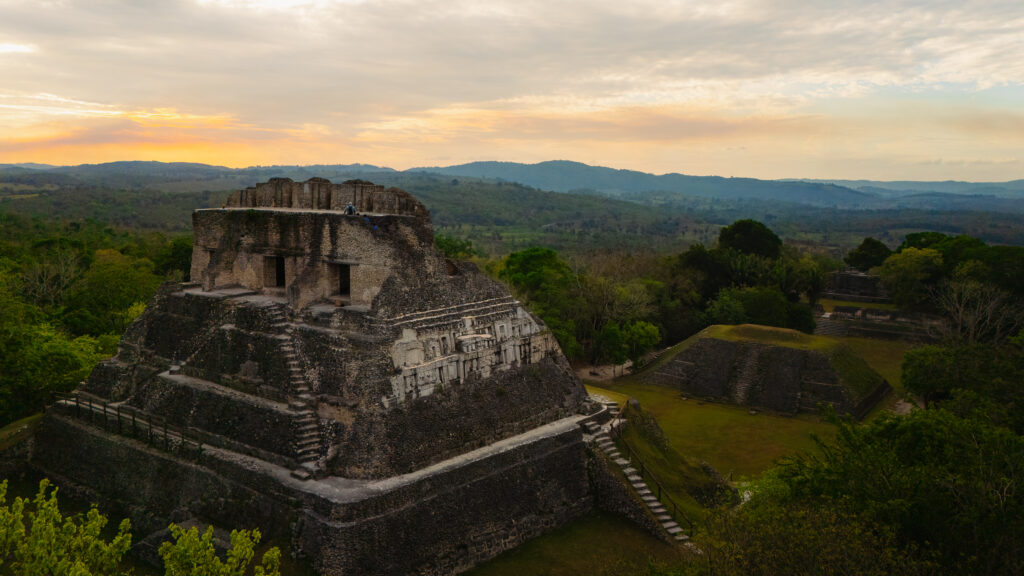
Although there is no evidence that the ancient Maya specifically documented the annual Perseid meteor shower, they regarded the heavens as a living, interconnected realm where celestial events carried meaning. Bright meteors and other unexpected phenomena would almost certainly have drawn attention, just as they continue to captivate observers today.
Belize is home to some of the most important Maya archaeological sites, including Caracol, Xunantunich, Cahal Pech, Lamanai, and Altun Ha. Together, these sites offer a glimpse into a civilization whose knowledge of astronomy was among the most advanced in the ancient Americas.
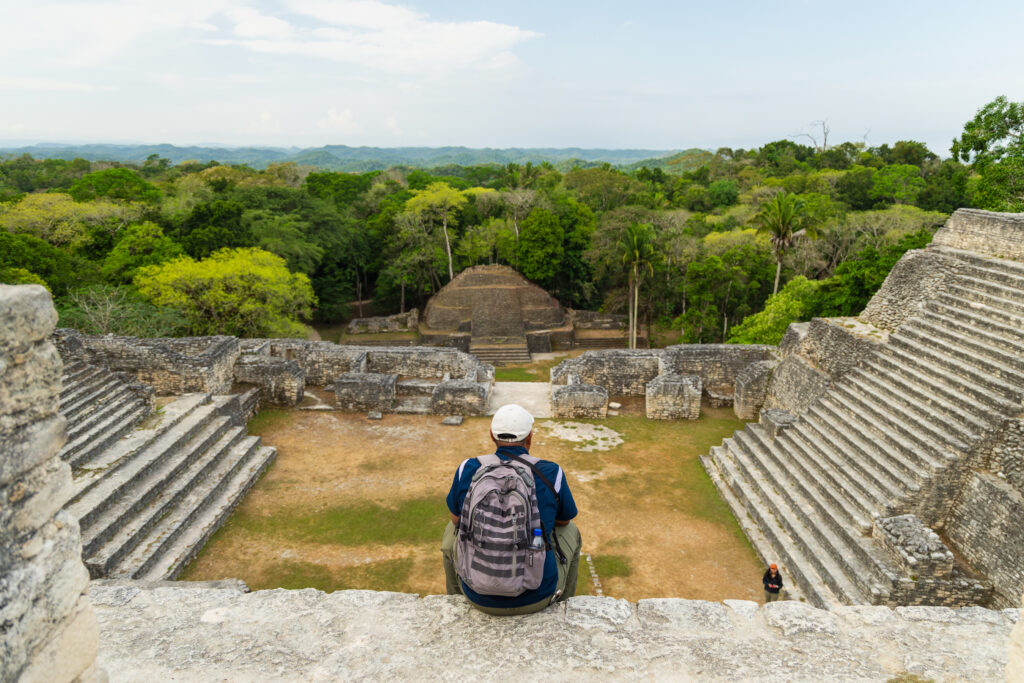
Even within the Chaa Creek Reserve lies Tunichilen, an ancient Maya archaeological site that reminds visitors these forests have been observed and inhabited for thousands of years. Standing beneath the same canopy of stars, it’s easy to imagine generations of Maya astronomers studying the heavens, finding patterns that helped shape one of the world’s greatest civilizations. While the Perseids offer a spectacular reminder of our place in the universe, they also invite us to appreciate the enduring relationship between humanity and the night sky.
From the Chaa Creek area near San Ignacio, you’ll also have excellent views of:
• The Milky Way stretching overhead.
• Saturn rising later in the evening.
• Rich star fields toward Scorpius and Sagittarius, ideal for binoculars.
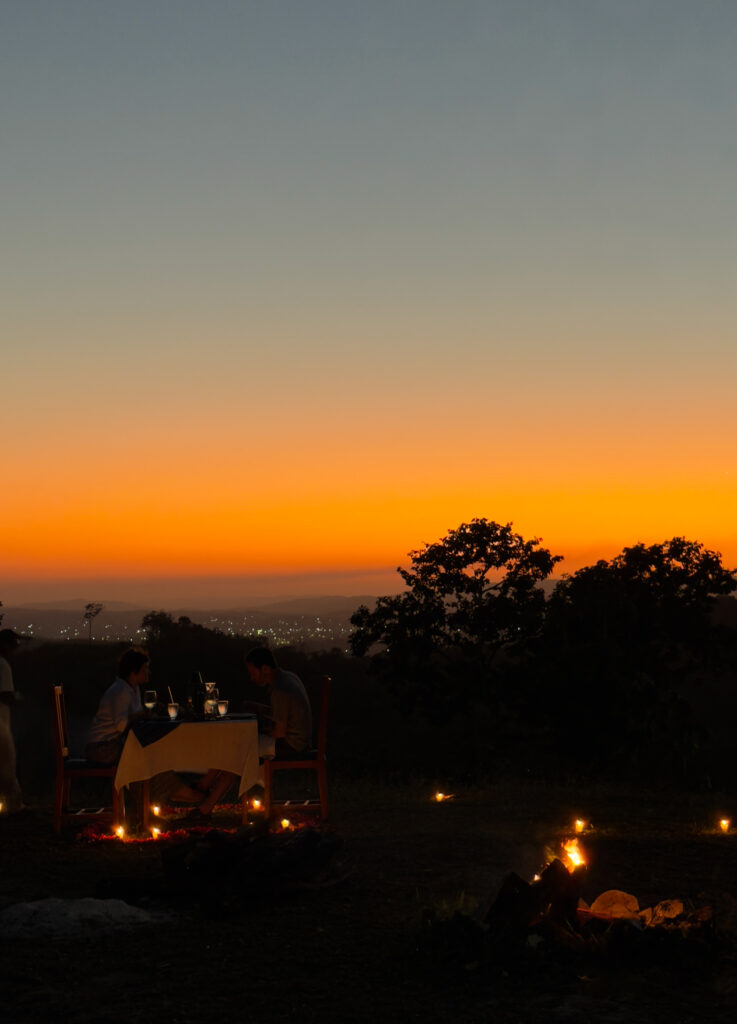
Why Belize Offers Exceptional Stargazing
One of Belize’s greatest advantages for stargazing is that many destinations have lost dark skies.
Light pollution occurs when artificial lighting from cities, roads, and buildings brightens the night sky, making stars increasingly difficult to see. Around the world, millions of people can no longer view the Milky Way from where they live because of excessive artificial light.
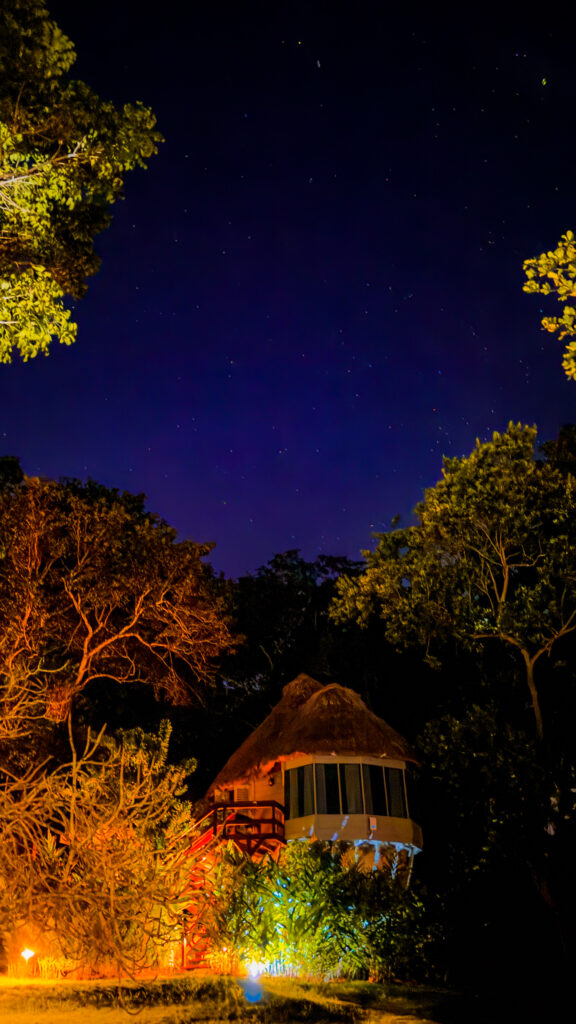
Belize remains different. With a relatively small population, large protected landscapes, and vast expanses of rainforest, many parts of the country experience very low levels of light pollution. Protected areas, including the forests of western Belize, provide ideal conditions for observing constellations, planets, meteor showers, and the brilliant band of the Milky Way stretching across the sky.
Here, the darkness isn’t empty it reveals more.
The Perseid Meteor Shower
Each August, Earth passes through the stream of dust and rocky debris left behind by Comet Swift-Tuttle, a comet that completes one orbit around the Sun approximately every 133 years. Although the comet itself is far from Earth, it leaves behind a trail of tiny particles, many no larger than grains of sand, that remain scattered along its orbital path.
As Earth travels through this debris field at nearly 30 kilometers (19 miles) per second, these particles collide with Earth’s atmosphere at speeds of up to 59 kilometers (37 miles) per second. The intense friction with atmospheric gases heats the particles to thousands of degrees, causing them to vaporize and produce the brilliant streaks of light we see as meteors.
Despite their spectacular appearance, most Perseid meteoroids are incredibly small and burn up completely between 80 and 100 kilometers (50–60 miles) above Earth’s surface, never reaching the ground.
The 2026 Perseid Meteor Shower is expected to be especially rewarding because it peaks near a new moon, meaning there will be very little moonlight to compete with the stars. Under clear, dark skies, observers may witness 50 to 100 meteors per hour, along with the occasional fireball, an exceptionally bright meteor created by a larger fragment that can briefly outshine the surrounding stars and leave a glowing trail lingering across the sky.
The shower takes its name from the constellation Perseus, where the meteors appear to originate, a perspective effect known as the radiant. In Greek mythology, Perseus was the legendary hero who slew the Gorgon Medusa and rescued Princess Andromeda from a sea monster. Although the meteors are not actually coming from the constellation itself, their paths appear to converge there from Earth’s perspective, giving the Perseids both their scientific identity and their enduring mythological name.
For the ancient Maya, whose understanding of the heavens shaped agriculture, architecture, and ceremonial life, these celestial displays would have unfolded beneath the same stars that continue to illuminate Belize’s skies today. While separated by cultures and continents, both the Maya and the ancient Greeks found stories, meaning, and guidance in the night sky a reminder that for thousands of years, humanity has looked upward with equal measures of curiosity and wonder.
Tips for the Best Viewing Experience
To enjoy the Perseids at their best:
- Watch on the nights of August 12–13.
- Head outside after 11:00 p.m., with activity increasing into the early morning hours.
- Find an open location away from artificial lights.
- Allow your eyes 20 to 30 minutes to adjust to the darkness.
- Bring a blanket or reclining chair and simply look up—meteor showers are best viewed without binoculars or a telescope.
- Perseid meteor shower peak: The Perseids reach their maximum on the night of August 12 into the early hours of August 13. Under dark skies, you could see 50–100 meteors per hour, with occasional bright fireballs.
- Near-perfect moon conditions: The Moon is essentially new (0–1% illuminated), so there will be virtually no moonlight to wash out the meteors or the Milky Way. This makes 2026 one of the best Perseid displays in years.
- Best viewing time: From about 11:00 p.m. until dawn, with the highest meteor rates typically between 2:00 a.m. and 4:30 a.m.
A Different Perspective on Belize
Belize is often celebrated for its ancient Maya cities, lush rainforests, abundant wildlife, and unforgettable adventures. Yet when the sun sets, another remarkable experience begins.
Standing beneath a canopy of stars, surrounded by rainforest, it’s easy to imagine the countless generations who have looked to these same skies for guidance, inspiration, and understanding. The stars that once informed Maya calendars and ceremonies continue to shine above Belize today, largely unobscured by the light pollution found in much of the modern world.
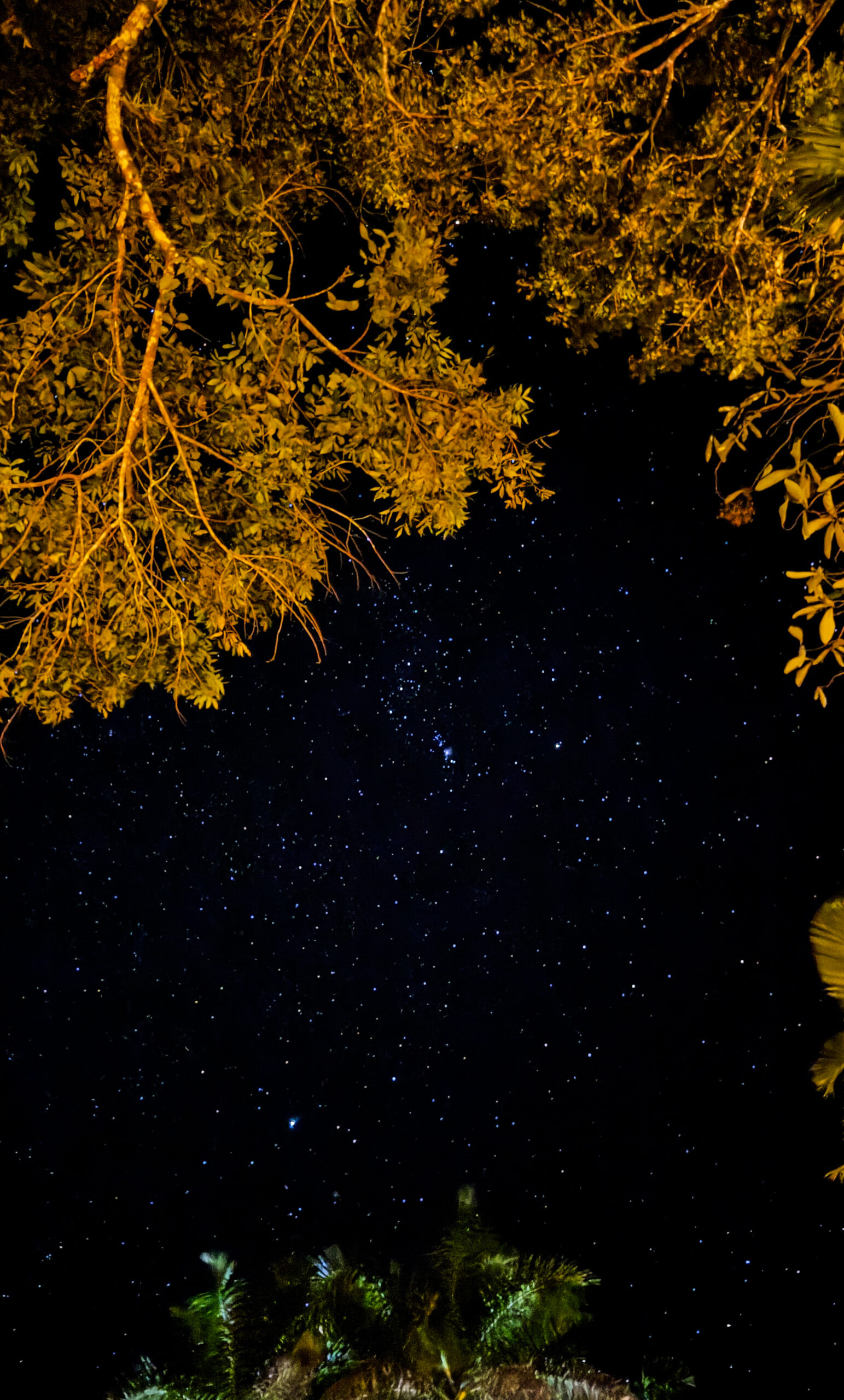
This August, take time to experience one of nature’s oldest spectacles. If you’re visiting for adventure, relaxation, or cultural discovery, the Perseid meteor shower offers a reminder that some of Belize’s most extraordinary attractions are found not only in its forests and rivers but high above them.
At The Lodge at Chaa Creek, the protected rainforest of the private nature reserve provides an exceptional setting to experience Belize’s dark skies. After a day of exploring ancient Maya temples, canoeing the Macal River, or hiking through the forest, end your evening by simply looking up. You may witness dozens of meteors streaking across the sky, the luminous band of the Milky Way, and a nightscape that has inspired wonder for thousands of years.

Plan your escape to Belize and discover why some of the country’s most unforgettable experiences begin after sunset. Contact us at reservations@chaacreek to book your stay~